DentTest
The complete BDS resource
12,400+ BDS MCQs & OSCE stations
DentTest is a free undergraduate dentistry question bank and linked textbook. It covers BDS Years 1 to 5 across all 16 UK dental schools, with 12,400+ practice questions, 119 published textbook chapters, 175 OSCE stations and 5 clinical reasoning cases.
DentTest is free
Every part of DentTest is free. There is no paid tier, no premium plan, no trial period and no credit card. Full access to all resources for GBP 0.
- Unlimited practice questions
- Advanced progress analytics
- Full textbook access
Learn from every wrong answer
Clinical photos, radiographs and graphs, from every subject in the BDS course. Pick the wrong option and you see exactly why, and how other students answered.
12,400+ questions, including MCQs, OSCE stations, clinical reasoning cases and SJT questions.
Start revising freeRadiology

Which image error is shown below?
A. Chin too high 16%
B. Chin too low 3%
C. Tongue not against palate 9%
D. Too far backwards 31%
Incorrect. This would cause the anterior teeth to be larger and wider than normal.
E. Too far forwards 41%
Correct. The patient is positioned too far forwards, causing the central incisors to be small and fuzzy and the cervical spine to be superimposed over the mandible.
Dental Materials

In comparison to the other curves shown on the graph, curve C is most characteristic of what type of material?
A. Polymer 10%
B. Strong ceramic 10%
C. Strong metal 31%
Incorrect. D and C show relatively high stiffness (steep gradient) with ductility (lots of strain), suggesting they are metals. D has the higher ultimate tensile strength, making D the strong metal.
D. Weak ceramic 6%
E. Weak metal 43%
Correct. C and D show relatively high stiffness (steep gradient) with ductility (lots of strain), suggesting they are metals. C has a lower ultimate tensile strength, making it the weak metal.
See where you stand
Every answer feeds your Performance page, so you can compare your score with other students overall, at your university or in your year.
Track your progressPerformance comparison
Your score of 82% puts you on the 66th percentile of registered users.
The histogram below shows the scores of other users.
A textbook built for BDS
Every chapter follows the same clinical structure, from presentation to prognosis, with clinical photos and tables. Each one links to the questions that test it.
Open the textbookTextbook / Oral Medicine / Defective Enamel Formation
Amelogenesis Imperfecta
From the DentTest dentistry textbook
Clinical casePathophysiologyEpidemiologyClinical FeaturesInvestigationsDifferentialsManagementPrognosis
Clinical Features
Amelogenesis imperfecta is a group of inherited conditions affecting enamel formation. It causes generalised abnormalities in enamel quantity, quality or maturation, and characteristically affects all or nearly all teeth in both dentitions.
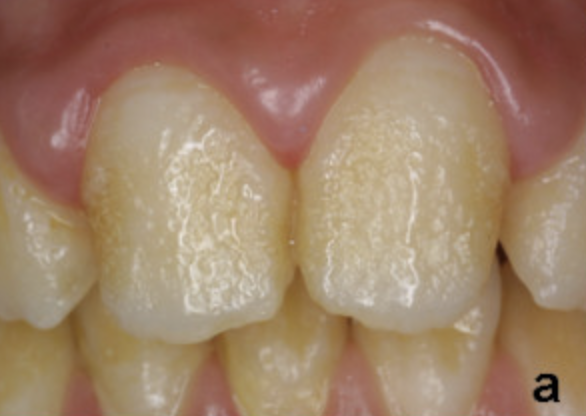
Reduced amount of enamel: thin, pitted or grooved
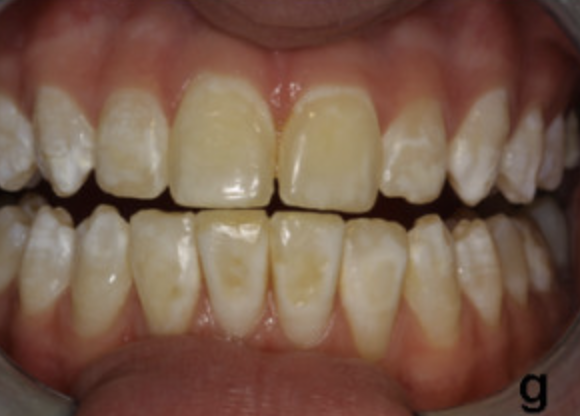
Near normal thickness but weak enamel: opaque white or brown patches
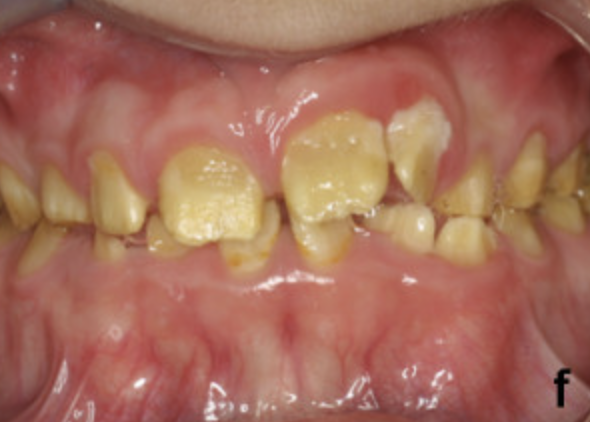
Normal matrix, poor mineralisation: soft, chalky enamel
23 questions test this chapter
Practise themImages: Crawford, Aldred and Bloch-Zupan, Orphanet J Rare Dis 2007;2:17, CC BY 2.0.
OSCE and clinical reasoning
Alongside single-best-answer questions, DentTest includes 175 timed OSCE stations with candidate instructions, actor briefs, examiner guides and marking checklists, plus 5 branching clinical reasoning cases that mirror real clinical decision-making.
Research and publications
Peer-reviewed research built on DentTest question data, including item analysis of single-best-answer questions published in BDJ Open.
Explore DentTest
Textbook (119 chapters) Question bank Publications FAQs Student reviews Metrics explained Updates About us
Get in touch
Have questions, feedback, or interested in working with us? We'd love to hear from you.